Sofia Rita Cardoso Fernandes
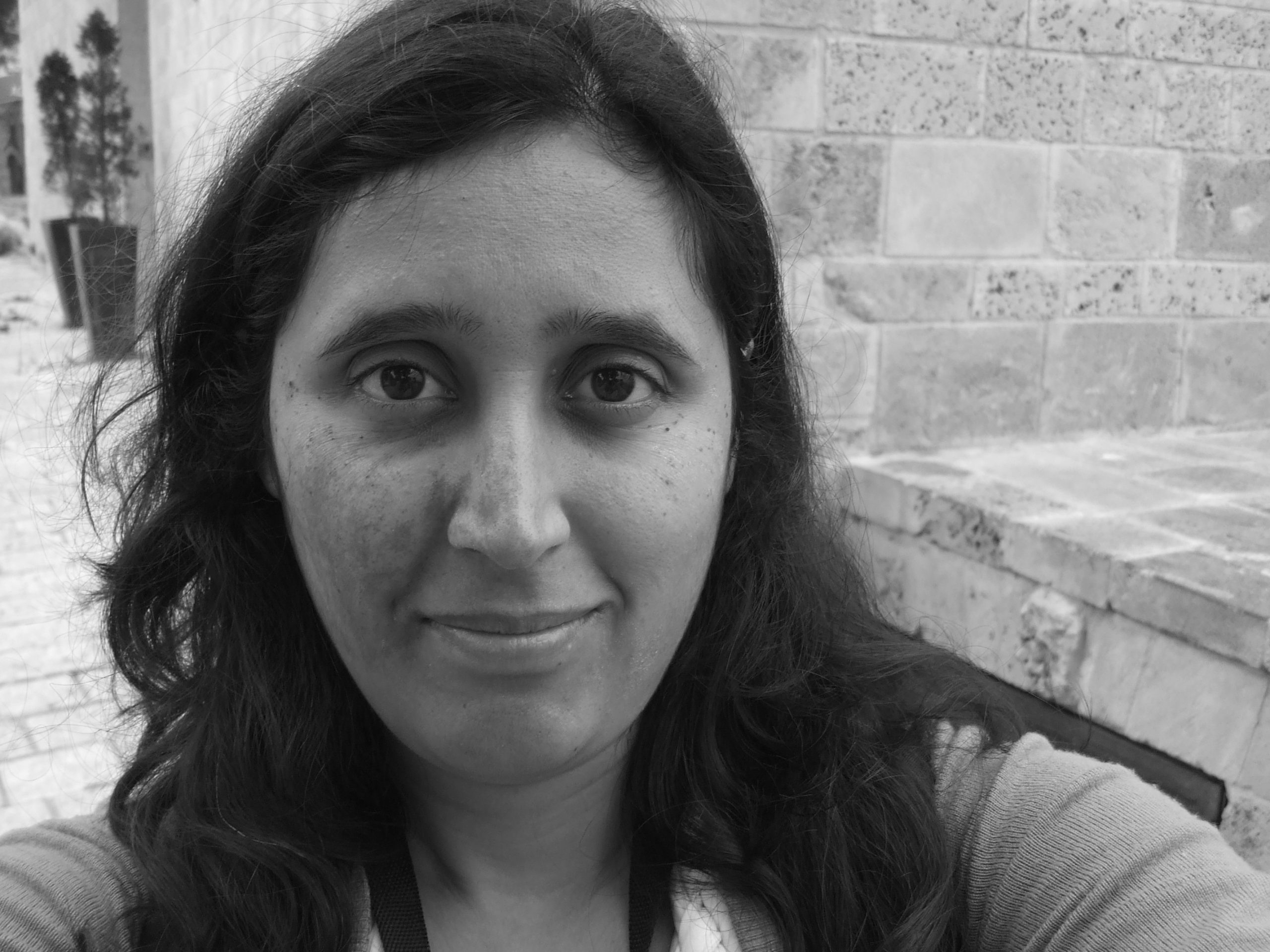
Room in IBEB
1.09
Contacts
E-mail: srcfernandes[at]fc.ul.pt
Professional networks
Curriculum
Research topics
- Neural Stimulation
- Realistic computer Modelling
- Finite Element Analysis
- tDCS
- tsDCS
- Brain Connectivity
- Electroencephalography
- Spinal Cord
- Electromiography
- Motor Control
- Amyotrophic Lateral Sclerosis
- Tissue Engineering
Biography
Sofia Rita Cardoso Fernandes was born in Lisbon on the 19th July 1976. After finishing high school, she completed a Bsc. degree in Physics (2001), in the Faculdade de Ciências da Universidade de Lisboa (FCUL). Soon after, she completed a MSc. in Astronomy and Astrophysics of the same college (2003), under a scholarship from a project PESO/P/PRO/40154/2000 “The Nearest Planet Nurseries”, funded by the Fundação para a Ciência e Tecnologia (FCT).
With a growing interest in health sciences, especially regarding to the study of neuromotor dysfunctions, she completed a BSc. in Physiotherapy in 2009 in the Escola Superior de Tecnologia da Saúde de Lisboa (ESTeSL). During her working experience as a physiotherapist, she found frequently cases of neurodegenerative dysfunctions and diseases, which contributed to a growing need to understand more how to act to prevent or delay the onset of symptoms related with these diseases. This motivation led her to enroll in the Doctoral Program in Neurosciences of the Faculdade de Medicina da Universidade de Lisboa (FMUL) in 2013. Her training in Physics and Physiotherapy was the main motivation for her PhD research project: the study of non-invasive application of direct currents (DC) for neuromodulation of neural networks of the spinal cord. In 2015, she got a FCT scholarship for her PhD project, developed at the Institute of Biophysics and Biomedical Engineering (IBEB), in collaboration with the Institute of Molecular Medicine (IMM). She finished her PhD in 2019, with thesis entitled “Transcutaneous Spinal Direct Current Stimulation: Modelling the spinal electric field distribution and clinical relevance” (Faculdade de Medicina, Universidade de Lisboa, FMUL). During her PhD, Sofia performed MRI segmentation and surface meshing operations to produce the first tetrahedral mesh computational model of a realistic human spinal cord and surrounding tissues. She simulated several protocols with this model, for transcutaneous spinal direct current stimulation (tsDCS), under the supervision of Professor Pedro Cavaleiro Miranda, one of the main precursors of realistic computational models of brain stimulation. These simulations were applied to optimize tsDCS protocols and unravel its therapeutic potential, under the supervision of Professor Mamede de Carvalho (FMUL, Instituto de Medicina Molecular João Lobo Antunes – iMM). Four papers were published in Q1 and Q2 international peer-reviewed journals (since 2018), as well as several international conference proceedings (since 2016). She currently co-supervise a PhD student at FMUL on tsDCS application in amyotrophic lateral sclerosis (ALS), a field where Professor Mamede has large international impact. With this collaboration, she also developed skills on statistical analyses of electromyography (EMG) and ALS-related measures.
Sofia currently leads the non-invasive brain and spinal cord stimulation (NIBSS) modelling team at IBEB (since September 2022) and coordinates the strategic project, combining brain connectivity, neuromodulation and computational modelling research lines, including supervision of several MSc theses and internships (national and international). Research is mainly focused in analysis of EEG data and how this changes with transcranial current stimulation (tCS), using a modelling-experimental approach.
Sofia also worked as a doctorate researcher at Centro para o Desenvolvimento Rápido do Produto (CDRSP, 2020), on the development of digital twins of stimulation of in vitro cultures in tissue engineering, and still collaborates through the supervision of a PhD student. She also lectures Bioelectricity and Electrophysiology and Human Movement and Motor Control in Master programmes in Biomedical Engineering and Physiotherapy. Her multidisciplinary research also triggered international collaborations, specifically: Portuguese representative at the international consortium on tsDCS in motorneuron diseases (EU JPND call 2022); tsDCS research with Professor Yasin Dhaher, UT Southwestern; research in high-definition tDCS with Doctor Amparo Callejon, University of Seville, including co-supervision of a PhD internship at the end of 2023; organization of international symposiums and member of the organizing committee of the annual Brain and Human Body Modelling Conference since 2022 (Martinos Center, Harvard Medical School).
https://www.webofscience.com/wos/author/record/JHU-1228-2023